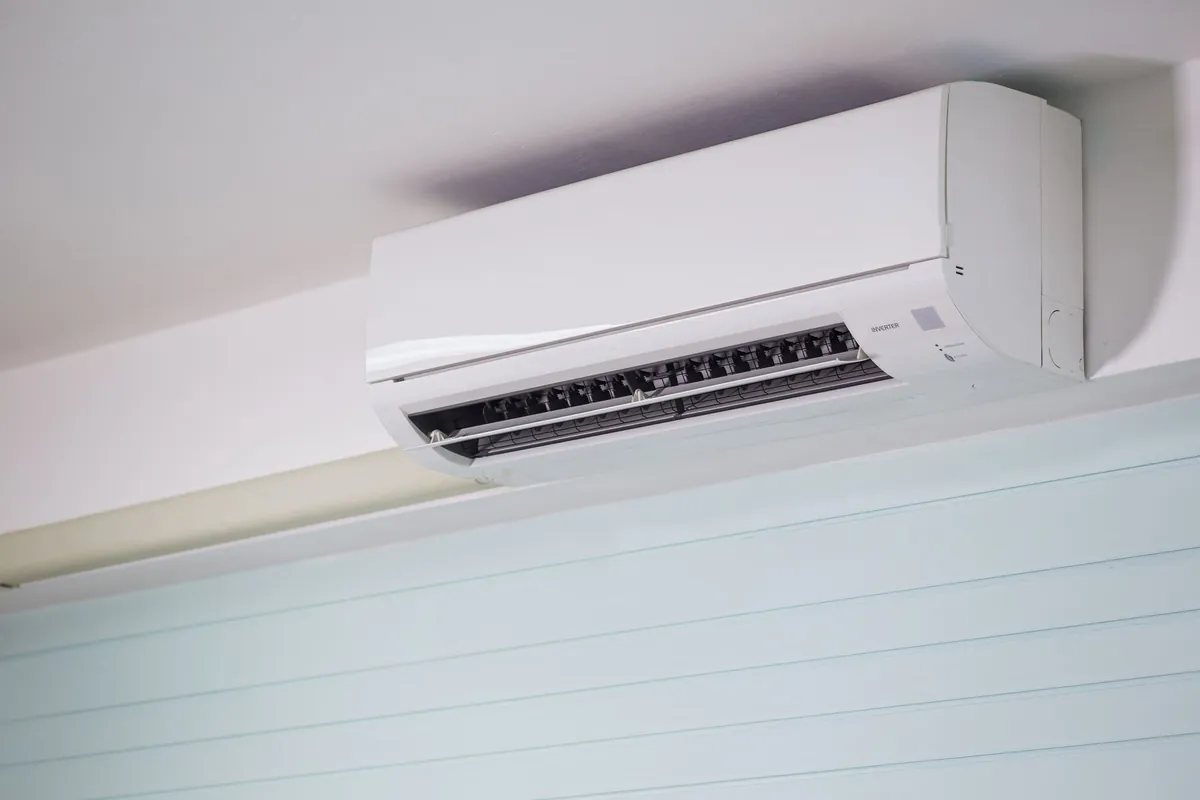
An air conditioner that leaks water inside a Florida house is almost always telling you that the condensate it removes from the air is not leaving the way it should. In most homes the cause is a clogged condensate drain line or an overflowing drain pan at the indoor unit, and the damage shows up as a wet closet floor, a stained ceiling under an attic air handler or a soft spot in the drywall. Turn the system off at the thermostat, catch or soak up the water you can see, and get two different problems handled: the HVAC repair, and the drying of whatever the water has already reached.
If water is dripping through a ceiling or spreading across a floor, call (844) 206-6708. A partner call service checks whether a participating water damage company serves your Florida address; we may be paid when you call. Prefer to write? Send a request through our contact page.
Why an AC makes water in the first place
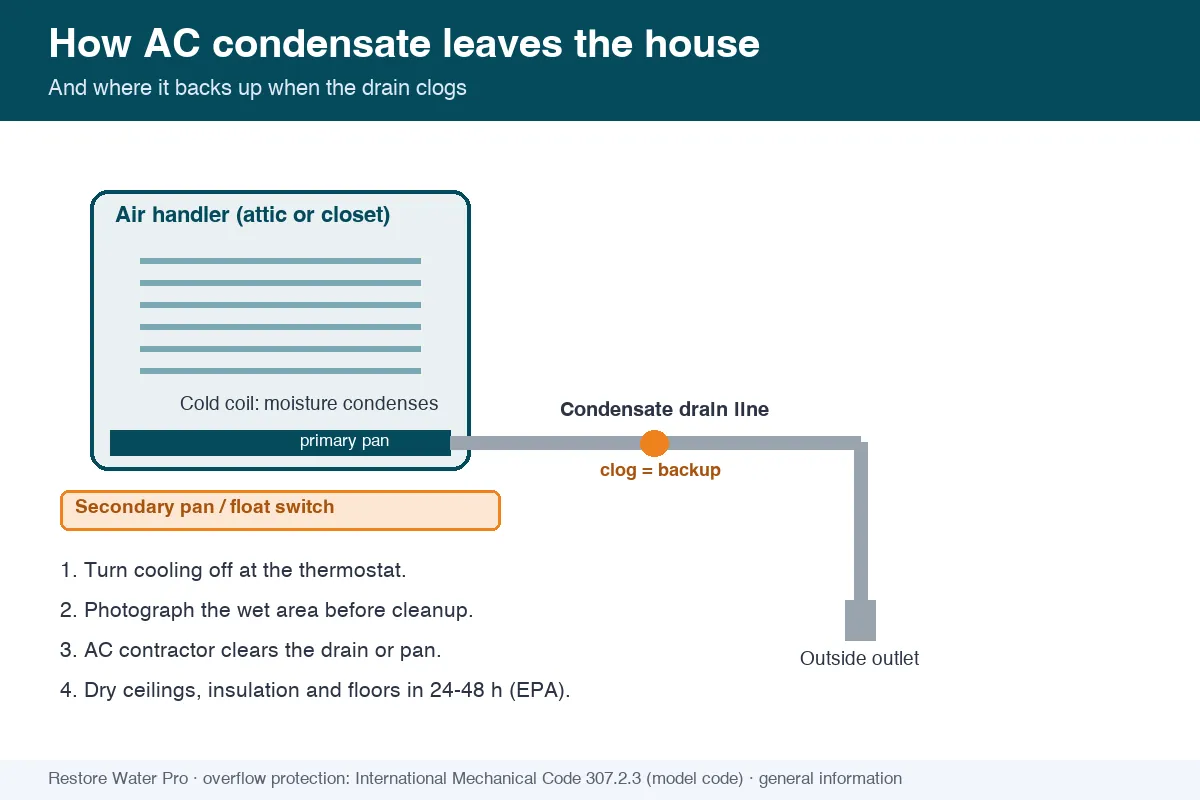
A central air conditioner cools by passing indoor air over a cold coil in the air handler. Moisture in that air condenses on the coil, drips into a drain pan and runs out through a condensate line, usually a PVC pipe that ends outside near the foundation or ties into a plumbing drain. In a humid climate the system pulls a steady stream of water out of the house for much of the year. That is normal and useful: the EPA recommends keeping indoor humidity below 60 percent, ideally between 30 and 50 percent (EPA, A Brief Guide to Mold, Moisture and Your Home).
The problem starts when the water cannot get out. ENERGY STAR’s maintenance checklist tells homeowners to check and inspect the condensate drain on a central air conditioner, furnace or heat pump in cooling mode, and gives the reason in one line: “A plugged drain can cause water damage in the house and affect indoor humidity levels” (ENERGY STAR, Maintenance Checklist).
The usual causes of an AC leaking water inside
| What you see | Likely cause | Who handles it |
|---|---|---|
| Water around the indoor unit in a closet or garage | Clogged condensate line backing up into the primary pan | Licensed air-conditioning contractor |
| Ceiling stain or drip under an attic air handler | Overflowing or rusted-through secondary pan, or a disconnected drain fitting | AC contractor for the unit; water damage provider for the ceiling |
| System stopped cooling and the pan is full | A float switch shut the unit off because the drain is blocked | AC contractor |
| Water dripping from a supply vent or grille | Condensation on cold ductwork or vents in humid air | AC contractor; see our condensation guide |
| Wall-mounted ductless unit dripping down the wall | Blocked or kinked drain hose on the indoor head | AC contractor |
Sweating vents and wet windows are a different problem from a drain leak. Our article on condensation or a leak in a Florida home explains how to tell the two apart before anyone opens a wall.
What to do in the first hour
- Turn the cooling off at the thermostat. No cooling means no new condensate. If the water is near the air handler’s wiring or an outlet, also switch off the breaker for the unit, from a dry spot.
- Protect what is under the leak. Put a bucket or towels under a ceiling drip. If the ceiling is sagging with water, keep people out of the room underneath.
- Photograph everything before you clean. The wet area, the stain, the pan and the drain line if you can see them. Florida DFS tells homeowners to take photographs of the damage before and after any repairs and to keep all receipts (Florida DFS, Homeowners Insurance Overview).
- Book the AC repair. Clearing a clogged line, replacing a corroded pan or reconnecting a drain fitting is HVAC work.
- Check how far the water traveled. Water from an attic handler can run along joists and appear several feet away. A water damage provider uses moisture meters to find the edges.
Why the drying matters as much as the repair
Once the drain is fixed, the leak stops, but the ceiling drywall, insulation, closet floor or baseboards stay wet. The EPA says to dry water-damaged areas and items within 24-48 hours to prevent mold growth, and that if materials are dried within that window, in most cases mold will not grow. Wet attic insulation and the paper face of drywall do not dry well on their own in a humid attic, which is why they are often removed rather than left to dry.
Our guides to ceiling water damage in Florida and how fast mold grows after a leak go into more detail.
Ceiling stained or insulation soaked above an air handler? Call (844) 206-6708 to check which participating water damage providers serve your area. A partner call service answers; we may be paid when you call.
Attic, closet or garage: why location changes the damage
Where the indoor unit sits decides where the water goes and how long it takes to notice:
- Attic air handler: the water lands on insulation and the top of the ceiling drywall first. By the time a stain shows below, the insulation is usually soaked and the drywall may be sagging. This is the case where moisture readings over a wide area matter most.
- Hall closet or interior closet: water spreads across the closet floor and wicks into the bottom of the surrounding walls and baseboards, and under flooring in the next room.
- Garage: a leak usually runs toward the door and is seen early, but it can still reach drywall and stored items.
- Ductless wall unit: water runs down the wall below the indoor head, behind furniture, and into the baseboard and flooring.
What the AC contractor will check
- Whether the condensate line is blocked and where, and how it was cleared.
- The condition of the primary pan under the coil and the secondary pan under an attic unit, including rust or holes.
- Whether the drain line is still connected and sloped so water flows out.
- Whether there is an overflow shutoff switch and whether it works.
- Whether a frozen coil, which can happen with low airflow, melted and overwhelmed the pan.
Ask for those findings on the invoice. They explain what happened if you file a claim, and they tell the water damage provider which areas to check.
Overflow protection on attic air handlers
The International Mechanical Code, which Florida’s mechanical code is based on, requires an auxiliary protection method where overflow from the primary condensate system could damage building components: an auxiliary drain pan draining to a conspicuous point, a separate overflow drain, an auxiliary pan with a water-level device, or a water-level device that shuts off the equipment if the primary drain is blocked. That last device is the float switch many Florida homeowners first meet when the AC stops cooling on a hot afternoon. If yours shut the system off, it did its job; resetting it without clearing the drain only brings the water back.
Florida licenses air-conditioning contractors by class under Florida Statutes s. 489.105; a certified contractor may work anywhere in the state, while a registered contractor may contract only in the local jurisdictions where registered. You can check a license on the DBPR license search.
Insurance: the leak and the damage are treated differently
Florida DFS notes that a homeowners policy may cover water damage, while damage from general wear and tear or lack of maintenance is commonly excluded (Florida DFS, Determine Your Coverage Needs). How your insurer treats a drain clog, a rusted pan or a long, slow drip depends on the wording of your policy, so read the water damage section and ask your agent. Report the loss promptly: under Florida Statutes s. 627.70132, notice of a property claim must be given within 1 year after the date of loss. Our page on whether insurance covers water damage in Florida has more.
Keeping it from happening again
- Have the condensate drain checked as part of routine AC service, as ENERGY STAR recommends.
- Know where your drain line exits outside; a dry outlet while the system is running in summer can be a sign of a blockage upstream.
- Look at the secondary pan under an attic unit when you are up there. Standing water or rust in it means the primary drain has already failed at least once.
- Ask your AC contractor whether your unit has an overflow shutoff switch and whether it works.
Frequently asked questions
Is it safe to keep running an AC that is leaking water?
Turn it off until the drain is cleared. Running it keeps producing condensate that has nowhere to go, and water near the air handler’s electrical parts is a hazard.
Why did my AC stop cooling when it started leaking?
Many systems have a water-level (float) switch that shuts the equipment off when the drain is blocked. It is a protection device; the fix is to clear the drain.
Can a clogged AC drain cause mold?
It can. ENERGY STAR says a plugged drain can cause water damage and affect indoor humidity, and the EPA says wet materials should be dried within 24-48 hours to prevent mold growth.
Who do I call, an AC company or a water damage company?
Often both. The air-conditioning contractor fixes the drain, pan or unit. A water damage provider finds and dries wet ceilings, insulation, walls and floors.
Does homeowners insurance pay for AC water damage?
It depends on your policy. DFS says policies may cover water damage but commonly exclude wear and tear and lack of maintenance. Check the wording and report the loss promptly.
Sources consulted November 13, 2026: ENERGY STAR, Maintenance Checklist (energystar.gov); U.S. EPA, A Brief Guide to Mold, Moisture and Your Home (updated February 18, 2026); International Mechanical Code section 307.2.3 (model code text); Florida Statutes s. 489.105 and s. 627.70132 (leg.state.fl.us); Florida DFS, Homeowners Insurance Overview and Determine Your Coverage Needs (myfloridacfo.com). General information, not legal, insurance or HVAC advice.
Checking what is available in your area
restorewaterpro.com is a connection service. We do not perform restoration, plumbing or air-conditioning work, and we do not employ technicians. If an AC leak has left wet ceilings, walls, insulation or floors in a Florida home and you want to be matched with participating water damage providers, call (844) 206-6708; a partner call service answers, and we may be paid when you call. Service-area matching applies, availability varies, homeowners only, and you decide whether to move forward.